Skiing Niseko in December: which weeks are actually worth booking
Niseko refuses to sell online lift passes before 12 December. That is the resort telling you what it thinks of the first week of the month.
By Jamie · 10 min read · Published 20 September 2026
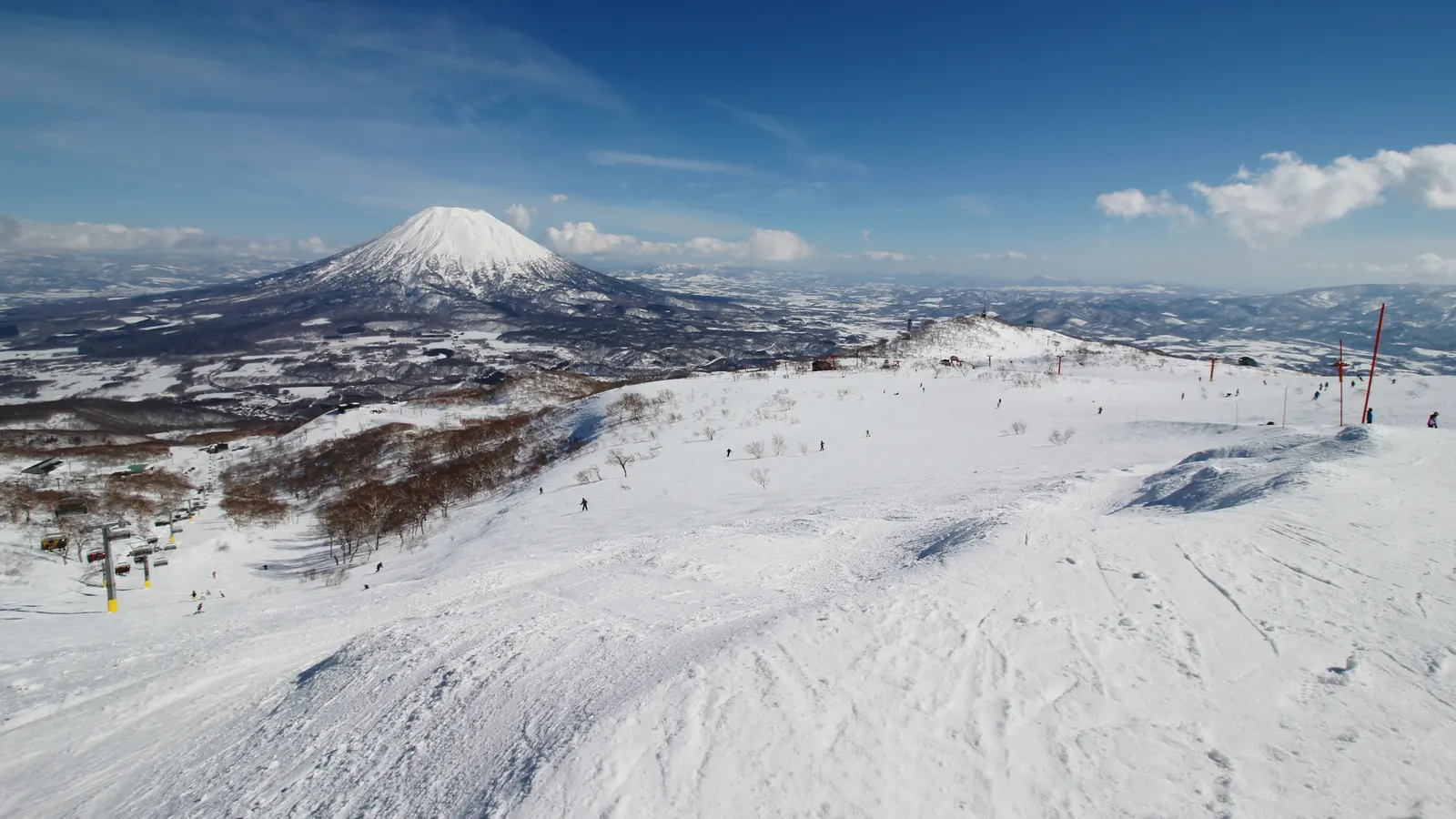
Yes, you can ski Niseko in December, and the week you choose matters more than anything else you will decide about the trip. The 2026-27 season runs 28 November 2026 to 5 May 2027, but those first two weeks are a genuine gamble and the resort itself says so: Niseko United will not sell you an early-season lift pass online, because it cannot promise the conditions.
That single piece of resort policy is the most useful thing on this page. Read it as the mountain's own forecast. Everything below is about picking the right side of it.
The three Decembers, and which one you want
Niseko United prices the month in bands, and the bands line up almost exactly with how good the skiing is. Here is the 2026-27 season as the resort has published it.
| Dates | Band | What you are getting |
|---|---|---|
| 28 Nov-11 Dec 2026 | Early season | Partial terrain, no online pass sales, cheapest |
| 12 Dec-23 Dec 2026 | Regular season | Night skiing running, base usually established |
| 24 Dec 2026-28 Feb 2027 | Peak season | Best odds on snow, highest prices, busiest |
The 12-23 December window is the one to book. Night skiing starts 12 December, the base is normally in by then, you are paying regular-season rates rather than peak, and you are ahead of the Australian school-holiday wave that lands from about the 20th. It is the only part of the month where the snow and the price are both on your side.
If you can only travel once the school holidays start, go anyway, but book earlier than feels reasonable and expect company. Over one million Australians visited Japan in 2025, and 121,300 of them arrived during the December school-holiday rush alone.
What the snow actually does
December is the build. January is the payoff. Niseko averages somewhere around 15 metres of snow across a season by the resort's own records, and January alone delivered 6.2 metres at Grand Hirafu in 2025-26.
December does not do that. The snowiest week of the month at Grand Hirafu is the fourth, which typically brings around 54cm across roughly six snowy days. That is a perfectly good week of skiing. It is not the waist-deep Japanese powder the photos sell, and going in the first week of December expecting it is how people come home disappointed.
The honest framing: December buys you a good trip with a real chance of a great one. January buys you the great one at peak prices.
Getting to Niseko from Australia
There is now a direct flight, and it changes the maths on the whole trip.
Qantas flies Sydney to Sapporo New Chitose (CTS) non-stop, the only non-stop service between Australia and Hokkaido. The 2026-27 schedule runs 7 December 2026 to 31 March 2027, and the flight is about 10 hours 50 minutes. Frequency steps up as the season does:
| Period | Flights per week |
|---|---|
| 7-15 Dec 2026 | 3 (Mon, Wed, Sat) |
| 16 Dec 2026-31 Jan 2027 | Up to 5 (Mon, Wed, Thu, Sat, Sun) |
| 1-28 Feb 2027 | 4 (Mon, Wed, Thu, Sat) |
| 1-31 Mar 2027 | 3 (Mon, Wed, Sat) |
Note what that means for the first week of December: the direct flight does not start until the 7th, and runs three times a week until the 16th. If you were planning to ski the opening fortnight, you are also fighting the thinnest flight schedule of the season.
From anywhere other than Sydney, you are connecting. The usual shapes are a domestic hop to Sydney for the direct, or an international flight into Tokyo (Haneda or Narita) and a domestic connection to New Chitose, which adds about 1 hour 40 minutes in the air plus the transfer between terminals or airports. Budget a full day either way.
One practical point that catches people: if you route through Tokyo and change from Narita to Haneda, that is a two-to-three hour ground transfer in its own right, and doing it with ski bags in December is not the way to start a holiday. If you are connecting in Tokyo, connect through the same airport.
You can compare flight options and typical fares to Japan before you commit to a routing.
New Chitose Airport to Niseko
This is the leg people underestimate. Niseko is roughly 100km from the airport and the transfer takes between two and a half and three and a half hours depending on the weather, which in Hokkaido in December is not a small variable.
| Option | Cost (approximate) | Time | Worth it when |
|---|---|---|---|
| Resort shuttle bus | ¥4,100-6,000 per person | 2.5-3.5 hrs | Almost always. Direct, ski-bag space, no driving |
| Train via Otaru to Kutchan | ¥3,000-4,000 plus taxi | 3 hrs plus | You enjoy trains and travel light |
| Private transfer | From about ¥48,000 per vehicle | 2.5-3 hrs | Groups of four or more, or arriving late |
| Rental car | ¥12,500-18,000 per day | 2-3 hrs | You want to ski more than one resort |
At roughly 112 yen to the Australian dollar, the bus works out around A$37-54 per person and the private transfer around A$430 for the vehicle. Check the rate before you travel; it moves.
Book the bus before you fly. Seats on the winter shuttles sell out in the peak weeks, and the alternative at 9pm in a snowstorm is an expensive taxi. You can compare airport transfer options for Japan in AUD rather than working it out at the counter.
If you are thinking about a rental car
Hokkaido in December means snow-covered roads, black ice and, frequently, driving in the dark by mid-afternoon. It is entirely doable, and Japanese hire cars come on winter tyres as standard, but it is not the place to learn.
If you do drive, you need an International Driving Permit, and you cannot get one after you land. Australia issues the 1949 Geneva Convention permit only, it has to be arranged before you leave, and driving without it in Japan is driving unlicensed, which will also void your hire car insurance. Our guide on how to get an International Driving Permit in Australia covers the process and the timing.
What a Niseko trip actually costs
Niseko is not a budget destination and December does not make it one. Real numbers, so you can sanity-check a quote:
- Lift pass: an adult one-day Niseko United All Mountain pass is ¥13,500 in peak season, about A$120. That covers all four resorts, Grand Hirafu, Hanazono, Niseko Village and Annupuri, and includes the inter-resort shuttle.
- Accommodation: averages around A$2,080 for a December stay, and the Christmas-to-mid-January window is the most expensive fortnight of the year.
- The whole trip: a family of four travelling in January can comfortably spend A$15,000-30,000 once flights, accommodation, transfers, hire and lessons are counted. Without flights, A$8,000-10,000 for a week is a realistic floor for four people in comfortable accommodation skiing every day.
When to book matters as much as what you book. For a peak-period trip, accommodation goes on sale roughly a year out and the good places are gone by autumn. Flights are usually loaded around a year ahead. If you are reading this in September for a December trip, you are late but not out of it; take what is available and be flexible on dates.
Japan also still runs on cash more than Australians expect, particularly for small restaurants, the lift-pass office at some resorts and vending machines on the mountain. Worth reading what card acceptance in Japan is actually like before you rely on tapping.
The insurance gap that catches Australian skiers
This is the part of the trip most people get wrong, and it is the one that can cost six figures.
Most standard travel insurance policies do not cover snow sports at all. Skiing and snowboarding are usually an optional add-on, and buying a policy for Japan without ticking that box leaves you uninsured for the only activity you flew there to do.
It gets narrower than that. The basic snow sports add-on typically covers on-piste skiing only. Japan's entire reputation rests on tree runs and off-piste powder, and those are frequently excluded. At least one Australian insurer specifically does not cover tree skiing in Japan even inside resort boundaries. An Australian skier who broke a leg in a closed tree area at Nozawa and needed a helicopter evacuation found her policy did not cover it.
Check three things in the wording before you buy:
- Is snow sports cover included or an add-on? Assume add-on unless it says otherwise.
- Does it cover off-piste, and on what terms? Many policies only cover off-piste with a guide, or only within resort boundaries. "Within boundaries" and "on marked runs" are not the same sentence.
- Does it cover tree skiing, and search and rescue? In Hokkaido these are the realistic scenarios, not an edge case.
Also remember that Medicare does not travel with you and Australia has no reciprocal health care agreement with Japan. There is no partial safety net here: it is your policy or your savings.
You can compare travel insurance for Japan with the snow sports question in mind, rather than sorting on price and discovering the exclusion in a clinic in Kutchan.
What else to sort before you fly
Japan is an easy country to enter and a fiddly one to arrive in unprepared.
- Entry: Australian passport holders get 90 days visa-free. There is no visa and no fee, but register on Visit Japan Web before you land and you will skip a long queue at immigration and customs. The Japan entry requirements page has the current detail and the date it was last checked.
- Connectivity: resort wifi in Niseko is patchy and you will want maps, lift status and a way to find your group on the mountain. An eSIM installed before you leave is the simplest answer; compare eSIM plans for Japan in AUD.
- Power: Japan runs 100V on Type A plugs, the lowest mains voltage in the world. Phone and laptop chargers cope fine. Australian hair dryers and curling wands often will not, and boot dryers drawing real current are worth checking. See power adapters by country.
- Your gear on the plane: ski and snowboard bags travel as checked baggage, and the things that catch people out are the small ones. Avalanche transceivers, spare camera batteries and boot dryers all have rules, and what you can take on a plane covers them item by item.
- The rest: the Japan pre-departure checklist puts the passport, insurance and connectivity steps in order with dates.
Frequently asked questions
Is December a good time to ski in Niseko?
The second half of December is good and the first half is a gamble. Niseko United does not sell early-season lift passes online for 28 November to 11 December because conditions are unpredictable, which tells you how the resort rates its own product then. From 12 December the base is usually established and night skiing is running.
When does Niseko open for the 2026-27 season?
Niseko United opens on 28 November 2026 and runs to 5 May 2027, weather permitting. Night skiing operates from 12 December 2026 to 22 March 2027 across all four ski areas.
How do you get from New Chitose Airport to Niseko?
The resort shuttle buses are the simplest option, taking two and a half to three and a half hours for roughly ¥4,100-6,000 per person, with space for ski bags. The train via Otaru to Kutchan takes about three hours and still needs a taxi at the end. Book the bus before you fly, because winter seats sell out.
Is there a direct flight from Australia to Niseko?
Not to Niseko, but Qantas flies Sydney to Sapporo New Chitose non-stop in about 10 hours 50 minutes, which is the closest airport. The 2026-27 service runs 7 December 2026 to 31 March 2027, three to five times a week depending on the month. From New Chitose it is a further two and a half to three and a half hours by road.
How much is a lift pass in Niseko?
An adult one-day Niseko United All Mountain pass is ¥13,500 in peak season, roughly A$120, covering all four resorts and the connecting shuttle. Early and regular season rates are lower, and early-season passes must be bought on the mountain rather than online.
Does travel insurance cover skiing in Japan?
Usually not by default. Snow sports are an optional add-on on most Australian policies, and even the standard add-on often covers on-piste skiing only, excluding the tree runs and off-piste terrain Japan is known for. Read the wording for off-piste, tree skiing and search and rescue specifically, and do not assume a policy that mentions "snow sports" covers how you actually intend to ski.
Do Australians need a visa for Japan?
No. Australian passport holders can enter visa-free for up to 90 days as a temporary visitor, with no fee and no online travel authorisation. Registering on Visit Japan Web before arrival is optional but saves a significant queue.
The bottom line
Book 12-23 December if the calendar lets you, get the Qantas direct out of Sydney if you can, and book the airport shuttle at the same time you book the room. Then spend twenty minutes on the insurance wording, because it is the only line item on this trip where getting it wrong costs more than the trip did.
Start with the Japan pre-departure checklist, which sequences the passport, insurance, eSIM and entry steps against your departure date.


